Tuesday, June 30, 2009

2009 Carmelite Family Day Announcement


The 2009 Carmelite Family Day will be celebrated on July 19, 2009 and it will be held at the covered court of the United Laboratories Corporation (UNILAB) in Mandaluyong City, the venue we have been using for the past six years. Since 1992, members of various congregations (nuns, student friars, priests, religious brothers and the seculars) affiliated with the two branches of Carmel, i.e. the OCarm and the OCD, gather together on the Sunday after July 16 for bonding and sharing of talents. The theme for this year is "PAMILYANG KARMELITA: PISTANG PILIPINO". The day will start with the registration at 7:00 a.m. Registration fee is sixty pesos per person. This will cover the cost of the various expenses incurred during the day - cost of the chair rental, IDs, printing of program, backdrop and stage decor, etc. Thanks to the generosity of the management of UNILAB and the assistance of Mr.Deo Castro, we do not have to pay for the use of the venue. As in the previous years, the event will kick off at 8 a.m. with the celebration of the Holy Eucharist. However, unlike in the previous years, the image of Our Lady of Mount Carmel will be brought into the hall in a procession (style CARACOL) then enthroned on the stage. The OCDS of Angeles, Pampanga has agreed to lend their image and to lead the procession. There will be also some games. After the presentation will be the lunch. The various congregations have been assigned a dish to be shared with the other participants as an add on to the congregations' "baon" for their members.

Monday, June 29, 2009

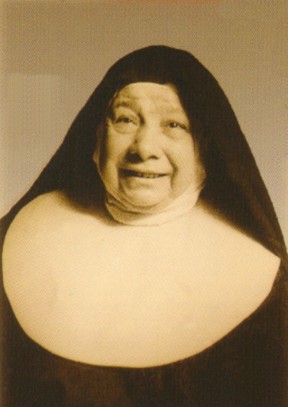
Blessed Maria Crocifissa Curcio

MARIA CROCIFISSA CURCIO (1877-1957)
Feastday - July 04
1st class relic under custody: ex ossibus

Maria Crocifissa Curcio, foundress of the Carmelite Missionary Sisters of Saint Therese of the Child Jesus, was born in Ispica (Rg), southeast Sicily, in the diocese of Noto, on January 30, 1877. Her parents were Salvatore Curcio and Concetta Franzò. Being the seventh of ten siblings, she spent her childhood in a highly cultural and social home environment, in which she quickly exhibited lively intelligence and a pleasant personality. She was very strong-willed and determined, and in her early teens she developed a strong tendency towards piety, with specific attention and solidarity towards the weak and marginalized.

At home she was raised under the strict moral guidelines, by virtue of which her father not only impeded her yearning for an intense life of faith, but according to the customs of the era, he did not permit her to study beyond grade six at the elementary level.

These deprivations cost her greatly. However, eager to learn, she drew comfort from the many books in the family library, where she found a copy of the Life of Saint Teresa of Jesus. The impact of this saint enabled her to come to know and love the Carmel, and so she began her "study of celestial things".

In 1890, at the age of thirteen, she succeeded, and not without difficulty, in enrolling in the Carmelite Third Order, which had only recently been re-established in Ispica. Because of her regular attendance at the Sanctuary of Our Lady of Mount Carmel and her deep devotion to Our Lady of Mount Carmel, who "had captured her heart since childhood" by assigning her the mission of “making the Carmel reflourish”, her knowledge of Carmelite Spirituality made her understand the divine plans in store for her.

Her desire to share the ideal of a Missionary Carmel, which unites the contemplative dimension with that of a specifically apostolic dimension, she began an initial experience of community life with a few fellow members of the Third Order in a small apartment in her ancestral home, which her siblings had bequeathed to her. She then transferred to Modica (Rg) where she was entrusted with the management of the "Carmela Polara” conservatory for the acceptance and assistance of young females who were orphans or in any way needy, with the firm resolution to turning them into "worthy women who would be useful to themselves and to society".

After several years of trials and hardships in the vain attempt to see this undertaking of hers in some way supported and officially recognized by the local ecclesiastic authorities, she finally managed to obtain the support and agreement of her missionary ideal in Father Lorenzo Van Den Eerenbeemt, a Carmelite Father of the Ancient Order. On May 17, 1925, she came to Rome for the canonization of St. Therese of the Child Jesus, and the next day, accompanied by father Lorenzo, she visited Santa Marinella, a small town on the Latium coast north of Rome. She was struck by the natural beauty of this region, but also by the extreme poverty of a great number of this town’s inhabitants and it was here that she finally realized that she had reached her landing place. Having obtained an oral permission “of experiment” from the bishop of the Diocese of Porto Santa Rufina, Cardinal Antonio Vico, on July 3,1925, she definitively settled in Santa Marinella, and on July 16 of the following year, she received the decree of affiliation of her small community with the Carmelite Order, hence sealing her belonging to Mary in the Carmel forever more.

In 1930, after many sufferings and crosses, her small nucleus obtained the recognition of the Church and Cardinal Tommaso Pio Boggiani, Ordinary of the diocese Porto Santa Rufina, erected the Congregation of the Carmelite Missionary Sisters of St. Therese of the Child Jesus as an institute of diocesan rights.

“To bring souls to God” is the objective that brought to life the numerous openings of educational and charitable institutions in Italy and abroad. For this reason she urged her daughters to bring a Christian point of view to families. She was able to achieve her missionary yearning in 1947 when, on the ashes of the second world war, she sent the first sisters to Brazil with the mandate to “never forget the poor”, continuing to dream of increasingly vast horizons towards which to drive the sails of her missionary Carmel.

With her entire life marked by poor health and diabetes, which she forced herself to always accept with strength and a serene adhesion to the will of God, she passed the last years of her life in illness, continuing to pray and to give of herself to her sisters, to whom she offers a precious example of virtues, which became all the more transparent and bright.

Her prayer was an imitate and constant dialogue with Jesus, the Father, and all the Blessed, inspired by a filial confidence, spousal love, sentiments of gratitude, praise, adoration and amends, that she sought to transmit, first of all, to her spiritual daughters and to all those who had the opportunity to know her through the example of her life, always nourishing the “desire to have holy daughters, eucharistic daughters, and daughters that know how to pray”.

She intensely cultivated the union of love with Christ in the Eucharist by giving all of herself to satisfy the desire to make amends “for the immense number of souls who do not know and do not love God” and by offering to be the victim of atonement along “with the Great Martyr of Love”. An amends which made her capable of sharing the pains and anxieties of humanity; of becoming aware of their various needs, with charity and justice; of providing a voice to those who do not have one; and of perceiving the image of the Crucified Christ in those whose image had been distorted by pain and suffering. For this reason she urged the sisters to “love with holiness the treasures with which the Divine Goodness entrusts you; the souls of the youth, the hope of the future.” And to not spare oneself in the service of the youth most humiliated and abandoned by “freeing in them the gold from the mud”, in order to restore in every creature the dignity and the image of being a child of God.

From the Mother of Jesus she learned to be a mother to those in need. With St. Therese of the Child Jesus she found spiritual bliss in the “regular and faithful fulfilment of one’s duties”, doing “with love and dedication even the smallest deeds”; experiencing with humility and simplicity, joy and tenderness, every human relationship and everyday achieving that unity of life and faith “by peacefully combining” the untiring activity of Martha and the profound mysticism of Mary.
On July 4, 1957, in Santa Marinella, she serenely returned forever to Christ, her spouse, leaving behind in everyone’s heart a live memory of her love and of her holiness.

Pope Paul VI and the Demographic Problem


This post may be out of streamline from the normal postings. I have recently receive an interesting video from an Orthodox archbishop that resides in New York which just show how prophetic is Pope Paul VI regarding his teaching on "Humanae Vitae".


2009 Annual Silent Retreat

The Lay Carmelite Province of St. Joseph had just finished their Thematic Retreats last May 25 - 27 for the Novices and Professed members and last June 12 - 14 for the Aspirants and Postulants. The retreat of May was directed by Rev. Fr. Domingo Salonga under the theme of "I Have Considered the Labor Well Spent: The Interior Castle (IC) 1 -3". This dealt with the IC Mansions 1 up to 3 of St. Teresa of Avila. The retreat was well attended having 70 participants. This was held at the Oasis of Prayer Rogationist House of Spirituality, Aguinaldo Highway, Silang, Cavite. After the retreat, Bro. Melvin Castro made his temporary profession to the Order.

On June 12 - 14, the TOC aspirants and postulants made their retreat at the Bukal ng Buhay Retreat House with the theme "Seasons of the Heart". This was given by Rev. Fr. Noel Rosas, O.Carm. The retreat is centered on the introduction about what Carmelite spirituality is and the teachings of the Carmelite saints in general.

The following points have been stressed at the retreat:

  • The Carmelite tradition recognizes this hunger in the human heart and says we are made this way.
  • We are made to seek and search, to yearn and ache, until the heart finds food sufficient for its hunger.
  • Carmelites name that food, that fulfilment, that goal of human desire…. “GOD.”
  • Carmelites have been intentionally pursuing that elusive, mysterious fulfilment for 800 years.
  • The tradition of Carmel attempts to name the hunger, give words to the desire, and express the journey’s end in God.
  • TO be a saint, means to be myself. Therefore the problem of sanctity and sanctification is finding WHO I AM.
  • OUR search for an answer of who God is, begins when we answer who we are.

After the retreat, two postulants from the Lay Carmelite Community of St. Mary Magdalene de Pazzi, Sis. Bernie Bustamante, and from the Lay Carmelite Community of St. John the Baptist, Sis. Lily Enriquez, was received to the Novitiate.

Monday, May 18, 2009

Pampanga Mission

On May 17, after the feast of St. Simon Stock, three members of the Regional Council of the Province of Saint Joseph made a trip to the municipality of San Luis, Pampanga. This was made to find out the viability of establishing a lay Carmelite community at the parish. Initial contact from a prospective aspirant, Terry Garcia, was made around March and then the following month, the parish priest, Rev. Fr. Fernando David, confirmed his willingness to have a TOC community at the jurisdiction of his parish.

Bro. Rue Santos (Regional Formator), Bro. Pol Gregorio (Regional Coordinator), and Sis. Baby Punzalan (Finance) went to the Parish of St. Aloysius Gonzaga and attended the Holy Mass. After the Holy Mass, a vocation talk was given about the nature and purpose of the third order. An open forum followed after the talk to help the prospective aspirants to discern if they are being called to the Order of Carmel.

If the Pampanga project bear fruit, it will be named Bl. Maria Sagrario de San Luis Gonzaga TOC Community.


Bro. Ruel, Bro. Terry, Sis. Baby, and Bro. Pol at the facade of the Church

The prospective aspirants with the Bulacan TOC Regional Council


Rev. Fr. Fernando David together with the participants

Tuesday, May 12, 2009

Schedule of the TOC National Council

June 2009

June 06: Canonical Visit to Kamias TOC Community (a.m.)

June 06: National Council Meeting (p.m.)
June 12 to 14: "Seasons of the Heart" Retreat with Fr. Noel Rosas, O.Carm.
June 27: Canonical Visit to Project 4 TOC Community

July 2009


July 11: Canonical Visit to Tarlac TOC Community and National Council Meeting
July 16: Solemn Commemoration of Our Lady of Mount Carmel
July 19: Carmelite Family Day
July 24 - 26: Luzon Regional Training for Formators

August 2009

August 08: Canonical Visit to Sikatuna TOC Community (a.m.)
August 08: National Council Meeting (p.m.)
August 15: NCR Junior Formation Course for Novices
August 29: Canonical Visit to Province of St. Joseph

September 2009

September 12: Canonical Visit to Sta. Cruz TOC Community and National Council Meeting
September 25 - 27: Canonical Visit to Bicol TOC Community

October 2009

October 04: Canonical Visit to Cubao TOC Community (a.m.)
October 04: Canonical Visit to Tondo TOC Community (p.m.)
October 17: Canonical Visit to Pilar and Bacoor TOC Community (a.m.)
October 17: National Council Meeting (p.m.)
October 24: Central Luzon Junior Formation Course for Novices

November 2009

November 14: National Council Meeting
November 21: Canonical Visit to Makati TOC Community
November 27 - 30: Canonical Visit to Mindanao TOC Communities and Mindanao Regional Training for Formators


Monday, May 11, 2009

The Relationship of the TOC and the Parish

Why is the TOC not under the supervision of the Parish Pastoral Council?

The spiritual and pastoral care of the TOC, entrusted by the Church to the Carmelite First Order, is the duty above all of their prior general and of their prior provincial. The altius moderamen, of which canon 303 speaks, belongs to them. The purpose of the altius moderamen is to guarantee the fidelity of the TOC to the Carmelite charism, communion with the Church and union with the Carmelite family, values which represent a vital commitment for the lay Carmelites.

What do you mean by “altius moderamen”?

Altius moderamen is a Latin juridical expression found in canon 303 of the Code of Canon Law (CIC): “Associations whose members live in the world but share in the spirit of some religious institute, under the overall direction of the same institute, and who lead an apostolic life and strive for Christian perfection, are known as third orders, or are called by some other suitable title”. The juridical relationship between a religious institute and the association of faithful called a third order (or other suitable title) with which it shares a spirituality is called altius moderamen or “higher direction”. The juridical relationship of the altius moderamen existing between the First Order and the TOC, in contrast to other associations of faithful and of other religious institutes, has its own characteristics (because of what we have already said) in virtue of the apostolic privilege granted by the Church to the TOC. This privilege directly commits the First Order. In what way? Let us go from the general to the particular. Can. 305 submits all the Associations of faithful to the “supervision of the competent ecclesiastical authority, which is to ensure that integrity of faith and morals is maintained in them and that abuses in ecclesiastical discipline do not creep in. The competent authority, therefore, has the duty and the right to visit these associations...” Can. 312 § 1 defines who the competent ecclesiastical authority is: for the TOC, as an “international public association in the Church”, it is the Holy See. For the apostolic privilege, the competence, to which can. 305 refers, is exercised by the Superiors of the Carmelite Order.

What is the role of the TOC in the parish/diocese?

The secular/lay Carmelites should collaborate with the bishops and follow their directions in so far as they are the moderators of the ministry of the Word and of the Liturgy and the coordinators of the various forms of apostolate in the local Church. The communities are subject to the vigilance of the Ordinary (local bishop) in so far as they perform their activities within the local Churches.

The communities established in a parish church should seek to cooperate in the animation of the parochial community, in the liturgy and in fraternal relations. They should integrate themselves into the pastoral apostolate as a whole, with preference for those activities more congenial to the Carmelite tradition and spirituality.

Sunday, May 10, 2009

Lenten Recollection of the Province of St. Joseph

The Lay Carmelites of the Region of St. Joseph made their lenten recollection last March 7 and 21. The March 7 recollection was given by Rev. Fr. Noel Rosas, OCarm at the Parish of Our Lady of Mount Carmel, Pulong Buhangin, Sta. Maria, Bulacan. This was attended by the communities of Malolos, Guiguinto, and Pulong Buhangin together with the Cofradia members of the parish.

The recollection of March 21 was given by Rev. Fr. Ronnie Tuazon, TOCarm of the Immaculate Conception Seminary. This was held at the Parish of Our Lady of Mount Carmel, Sabang, Baliuag, Bulacan. The communities of Baliuag, Hagonoy, Calumpit, and Alido attended the said event. After the recollection, an observer of the community of Alido, Cecil Tantoco, was received as an aspirant.

Friday, March 06, 2009

New Local Councils

Sta. Ana TOC Community (2009 - 2012)
Sta. Ana, Manila

Prioress: Amelia Cobangbang, TOCarm
1st Councilor: Philip Escudero, TOCarm
2nd Councilor: Lucy San Antonio, TOCarm
3rd Councilor: Andrea Dimayuga, TOCarm

Our Lady of Nazareth TOC Community (2009 - 2012)
Cabanatuan City, Nueva Ecija


Prioress: Rosario Andres, TOCarm

Friday, November 21, 2008

Establishment of Saints Elijah and Elisha TOC Community

On October 25, the opening mass for the establishment of the Sts. Elijah and Elisha TOC community was held at the Parish of Our Lady of Mount Carmel, Sabang, Baliuag, Bulacan. The liturgy was officiated by the Provincial Delegate to the TOC, Rev. Fr. Noel Rosas, O.Carm. together with Rev. Fr. Ibarra Mercado, parish priest. Seventeen (17) aspirants were received on that day. This is the 7th foundation in the TOC Province of St. Joseph (Bulacan) making it the largest TOC province in the Philippines consisting of four (4) canonical communities and three (3) communities-in-formation.


The TOC Calumpit (Mother Community) together with Fr. Noel and Fr. Barry

Fr. Noel reading Rites of Admission to Formation

Fr. Noel giving the homily

The TOCs of Bulacan in attendance
The Parish of Our Lady of Mount Carmel, Sabang