16th July
Tuesday, July 14, 2009
Solemn Commemoration of Our Lady of Mount Carmel
Monday, July 06, 2009
St. Teresa of Jesus "de los Andes"

virgin, Discalced Carmelite Nuns
Feastday: July 13
The young woman who is today glorified by the Church with the title of Saint, is a prophet of God for the men and women of today. By the example of her life, TERESA OF JESUS OF LOS ANDES shows us Christ's Gospel lived down to the last detail.
She is irrefutable proof that Christ's call to be Saints is indeed real, it happens in our time, and can be answered. She is presented to us to demonstrate that the total dedication that following Christ involves, is the one and only thing that is worth this effort and that gives us true happiness.
Teresa of Los Andes with the language of her ardent life, confirms for us that God exists, that God is love and happiness, and that he is our fulfilment.
She was born in Santiago de Chile on 13 July 1900. At the font she was christened Juana Enriqueta Josefina of the Sacred Hearts Fernandez Solar. Those who knew her closely called her Juanita, the name by which she is widely known today.
She had a normal upbringing surrounded by her family: her parents Miguel Fernandez and Lucia Solar, three brothers and two sisters, her maternal grandfather, uncles, aunts and cousins.
Her family were well-off and were faithful to their Christian faith, living it with faith and constancy.
Juana was educated in the college of the French nuns of the Sacred Heart. Her brief but intense life unfolded within her family and at college. When she was fourteen, under God's inspiration, she decided to consecrate herself to him as a religious in the Discalced Carmelite Nuns.
This desire of hers was realized on 7 May 1919, when she entered the tiny monastery of the Holy Spirit in the township of Los Andes, some 90 kilometers from Santiago.
She was clothed with the Carmelite habit 14 October the same year and began her novitiate with the name of Teresa of Jesus. She knew a long time before that she would die young. Moreover the Lord revealed this to her. A month before she was to depart this life, she related this to her confessor.
She accepted all this with happiness, serenity and confidence. She was certain that her mission to make God known and loved would continue in eternity.
After many interior trials and indescribable physical suffering caused by a violent attack of typhus that cut short her life, she passed from this world to her heavenly Father on the evening of 12 April 1920. She received the last sacraments with the utmost fervour, and on 7 April, because of danger of death, she made her religious profession. She was three months short of her 20th birthday, and had yet 6 months to complete her canonical novitiate and to be legally able to make her religious profession. She died as a Discalced Carmelite novice.
Externally this is all there is to this young girl from Santiago de Chile. It is all rather disconcerting and a great question arises in us, "What was accomplished?" The answer to such a question is equally disconcerting: living, believing, loving.
When the disciples asked Jesus what they must do to carry out God's work, he replied, "This is carrying out God's work: you must believe in the one he has sent." (Jn 6, 28-29). For this reason, in order to recognize the value of Juanita's fife, it is necessary to examine the substance within, where the Kingdom of God is to be found.
She wakened to the life of grace while still quite young. She affirms that God drew her at the age of six to begin to spare no effort in directing her capacity to love totally towards him. "It was shortly after the 1906 earthquake that Jesus began to claim my heart for himself." (Diary n. 3, p. 26).
Juanita possessed an enormous capacity to love and to be loved joined with an extraordinary intelligence. God allowed her to experience his presence. With this knowledge he purified her and made her his own through what it entails to take up the cross. Knowing him, she loved him; and loving him, she bound herself totally to him.
Once this child understood that love demonstrates itself in deeds rather than words, the result was that she expressed her love through every action of her life. She examined herself sincerely and wisely and understood that in order to belong to God it was necessary to die to herself in all that did not belong to him.
Her natural inclinations were completely contrary to the demands of the Gospel. She was proud, self-centred, stubborn, with all the defects that these things suppose, as is the common lot. But where she differed from the general run, was to carry out continual warfare on every impulse that did not arise from love.
At the age of ten she became a new person. What lay immediately behind this was the fact that she was going to make her first Communion. Understanding that nobody less that God was going to dwell within her, she set about acquiring all the virtues that would make her less unworthy of this grace. In the shortest possible time she managed to transform her character completely.
In making her first Communion she received from God the mystical grace of interior locutions, which from then on supported her throughout her fife. God took over her natural inclinations, transforming them from that day into friendship and a fife of prayer.
Four years later she received an interior revelation that shaped the direction of her life. Jesus told her that she would be a Carmelite and that holiness must be her goal.
With God's abundant grace and the generosity of a young girl in love, she gave herself over to prayer, to the acquiring of virtue and the practice of a life in accord with the Gospel. Such were her efforts that in a few short years she reached a high degree of union with God.
Christ was the one and only ideal she had. She was in love with him and ready each moment to crucify herself for him. A bridal love pervaded her with the result that she desired to unite herself fully to him who had captivated her. As a result, at the age of fifteen she made a vow of virginity for 9 days, continually renewing it from then on.
The holiness of her life shone out in the everyday occurrences, wherever she found herself: at home, in college, with friends, the people she stayed with on holidays. To all, with apostolic zeal, she spoke of God and gave assistance. She was young like her friends, but they knew she was different. They took her as a model, seeking her support and advice. All the pains that are part of living, Juanita felt keenly, and the happiness she enjoyed deeply, all in God.
She was cheerful, happy, sympathetic, attractive, communicative and involved in sport. During her adolescence she reached perfect psychic and spiritual equilibrium. These were the fruit of her asceticism and prayer. The serenity of her face was a reflection of the divine guest within. Her life as a nun, from 7 May 1919, was the last rung on the ladder to holiness. Only eleven months were necessary to bring to an end the process of making her life totally Christ-like.
Her community was quick to discover the hand of God in her past life. The young novice found in the Carmelite way of life the full and efficient channel for spreading the torrent of life that she wanted to give to the Church of Christ. It was a way of life that, in her own way, she had lived amongst her own and for which she was born. The Order of the Virgin Mary of Mount Carmel fulfilled the desires of Juanita. It was proof to her that God's mother, whom she had loved from infancy, had drawn her to be part of it.
She was beatified by Pope John Paul II in Santiago de Chile on 3 April 1987. Her remains are venerated in the Sanctuary of Auco-Rinconada of Los Andes by the thousands of pilgrims who seek in her and find guidance, light and a direct way to God.
SAINT TERESA OF JESUS OF LOS ANDES is the first Chilean to be declared a Saint. She is the first Discalced Carmelite Nun to become a Saint outside the boundaries of Europe and the fourth Saint Teresa in Carmel together with Saints Teresa of Avila, of Florence and of Lisieux.
Promulgation of the Decree of the Congregation for Causes of Saintsconcerning the miracle attributed to Venerable Angelo Paoli
On 3rd July 2009, the Holy Father, Benedict XVI, received in a private audience the Prefect of the Congregation for the Causes of Saints, the Archbishop Angelo Amato, SDB. During the course of the audience the Holy Father authorized the Congregation to promulgate the Decree concerning a miracle attributed to the intercession of Venerable Angelo Paoli, (1642-1720), Italian national and Professed Priest of our Order.
The Holy See, in consultation with the Order and the Bishops concerned, will set a date and a place for the Beatification.
CITOC Online
Saturday, July 04, 2009
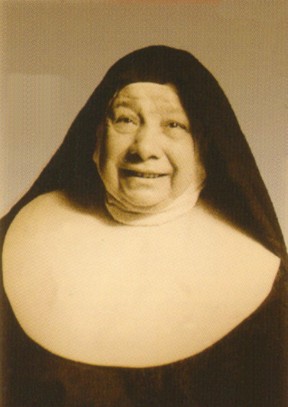
Opening of Bl. Maria Sagrario de San Luis Gonzaga TOC Community
Bl. Maria Sagrario de San Luis Gonzaga
Fr. Fernando David (Parish Priest) imposing the Confraternity Scapular to the Aspirants
The founding members of the TOC community
Baliuag TOCs together with the relics of Carmelite saints including the relic of Bl. Maria Sagrario

The members of the Bl. Maria Sagrario de San Luis Gonzaga TOC Community together with Rev. Fr. Fernando David and the Bulacan TOCs
Note: With the founding of this community, the Lay Carmelite Province of Saint Joseph is now composed of Bulacan and Pampanga.
Wednesday, July 01, 2009
Blessed Joan Scopelli
Joan was born at Reggio Emilia in 1428; her parents were Simon and Catherine. We know little of her early years: she had two sisters, whom she helped to get married, and a brother. Joan herself obtained the permission of her parents to become a Carmelite mantellate, a semi-religious who lived at home. After her parents had died, she joined a lady of modest means, but of great piety, who was thinking of building a monastery.
Joan took on the task of looking for a suitable place, when a widow offered herself, two daughters, and her home. They lived together from 1480 until 1484; meanwhile Joan was looking for another place that could serve as a monastery. Two other young girls had already joined them, one in 1458 and the other in 1476. Joan set her eyes on the church of St. Bernard, which belonged to the Humiliati friars; with the support of the bishop, Philip Zoboli, she obtained it from the friars' general on his way through Reggio. The beginnings of the new monastery date from 1485, with the name changed from that of St. Bernard to that of St. Mary of the People (afterwards called of the White Sisters). The inevitable financial difficulties at the beginning were surmounted through the help of a certain Christopher Zoboli. Under Joan's direction more than twenty religious made up the new community, which was entrusted to the care of the Mantuan Congregation of Carmelites and for which the Carmelites provided a confessor in 1487.
God gifted Joan with extraordinary charisms. She herself fostered a deep Marian piety (she venerated the Blessed Virgin with a special «devotion» of her own, called the Tunic of Our Lady /mainly a frequent repetition of «Hail Marys»/) and was animated by an intense spirit of penance. She died on July 9, 1491; her cult began the following year, with the exhumation of her body. In 1500 a public judgment was passed on her life, her virtues and her miracles. During the years 1767-70 the diocesan process for the recognition of cult was held, which met with the approval of Pope Clement XIV on Aug. 24, 1771. After the suppression of the monastery and of the church of the Carmelite nuns in 1797, the body of the blessed was transferred to the cathedral in the year 1803
Tuesday, June 30, 2009
For the Year of Priests
"Faithfulness of Christ, faithfulness of priests"
A tribute to Filipino priests
2009 Carmelite Family Day Announcement

Monday, June 29, 2009
Blessed Maria Crocifissa Curcio
At home she was raised under the strict moral guidelines, by virtue of which her father not only impeded her yearning for an intense life of faith, but according to the customs of the era, he did not permit her to study beyond grade six at the elementary level.
These deprivations cost her greatly. However, eager to learn, she drew comfort from the many books in the family library, where she found a copy of the Life of Saint Teresa of Jesus. The impact of this saint enabled her to come to know and love the Carmel, and so she began her "study of celestial things".
In 1890, at the age of thirteen, she succeeded, and not without difficulty, in enrolling in the Carmelite Third Order, which had only recently been re-established in Ispica. Because of her regular attendance at the Sanctuary of Our Lady of Mount Carmel and her deep devotion to Our Lady of Mount Carmel, who "had captured her heart since childhood" by assigning her the mission of “making the Carmel reflourish”, her knowledge of Carmelite Spirituality made her understand the divine plans in store for her.
Her desire to share the ideal of a Missionary Carmel, which unites the contemplative dimension with that of a specifically apostolic dimension, she began an initial experience of community life with a few fellow members of the Third Order in a small apartment in her ancestral home, which her siblings had bequeathed to her. She then transferred to Modica (Rg) where she was entrusted with the management of the "Carmela Polara” conservatory for the acceptance and assistance of young females who were orphans or in any way needy, with the firm resolution to turning them into "worthy women who would be useful to themselves and to society".
After several years of trials and hardships in the vain attempt to see this undertaking of hers in some way supported and officially recognized by the local ecclesiastic authorities, she finally managed to obtain the support and agreement of her missionary ideal in Father Lorenzo Van Den Eerenbeemt, a Carmelite Father of the Ancient Order. On May 17, 1925, she came to Rome for the canonization of St. Therese of the Child Jesus, and the next day, accompanied by father Lorenzo, she visited Santa Marinella, a small town on the Latium coast north of Rome. She was struck by the natural beauty of this region, but also by the extreme poverty of a great number of this town’s inhabitants and it was here that she finally realized that she had reached her landing place. Having obtained an oral permission “of experiment” from the bishop of the Diocese of Porto Santa Rufina, Cardinal Antonio Vico, on July 3,1925, she definitively settled in Santa Marinella, and on July 16 of the following year, she received the decree of affiliation of her small community with the Carmelite Order, hence sealing her belonging to Mary in the Carmel forever more.
In 1930, after many sufferings and crosses, her small nucleus obtained the recognition of the Church and Cardinal Tommaso Pio Boggiani, Ordinary of the diocese Porto Santa Rufina, erected the Congregation of the Carmelite Missionary Sisters of St. Therese of the Child Jesus as an institute of diocesan rights.
“To bring souls to God” is the objective that brought to life the numerous openings of educational and charitable institutions in Italy and abroad. For this reason she urged her daughters to bring a Christian point of view to families. She was able to achieve her missionary yearning in 1947 when, on the ashes of the second world war, she sent the first sisters to Brazil with the mandate to “never forget the poor”, continuing to dream of increasingly vast horizons towards which to drive the sails of her missionary Carmel.
With her entire life marked by poor health and diabetes, which she forced herself to always accept with strength and a serene adhesion to the will of God, she passed the last years of her life in illness, continuing to pray and to give of herself to her sisters, to whom she offers a precious example of virtues, which became all the more transparent and bright.
Her prayer was an imitate and constant dialogue with Jesus, the Father, and all the Blessed, inspired by a filial confidence, spousal love, sentiments of gratitude, praise, adoration and amends, that she sought to transmit, first of all, to her spiritual daughters and to all those who had the opportunity to know her through the example of her life, always nourishing the “desire to have holy daughters, eucharistic daughters, and daughters that know how to pray”.
She intensely cultivated the union of love with Christ in the Eucharist by giving all of herself to satisfy the desire to make amends “for the immense number of souls who do not know and do not love God” and by offering to be the victim of atonement along “with the Great Martyr of Love”. An amends which made her capable of sharing the pains and anxieties of humanity; of becoming aware of their various needs, with charity and justice; of providing a voice to those who do not have one; and of perceiving the image of the Crucified Christ in those whose image had been distorted by pain and suffering. For this reason she urged the sisters to “love with holiness the treasures with which the Divine Goodness entrusts you; the souls of the youth, the hope of the future.” And to not spare oneself in the service of the youth most humiliated and abandoned by “freeing in them the gold from the mud”, in order to restore in every creature the dignity and the image of being a child of God.
From the Mother of Jesus she learned to be a mother to those in need. With St. Therese of the Child Jesus she found spiritual bliss in the “regular and faithful fulfilment of one’s duties”, doing “with love and dedication even the smallest deeds”; experiencing with humility and simplicity, joy and tenderness, every human relationship and everyday achieving that unity of life and faith “by peacefully combining” the untiring activity of Martha and the profound mysticism of Mary.
On July 4, 1957, in Santa Marinella, she serenely returned forever to Christ, her spouse, leaving behind in everyone’s heart a live memory of her love and of her holiness.
Pope Paul VI and the Demographic Problem
2009 Annual Silent Retreat
On June 12 - 14, the TOC aspirants and postulants made their retreat at the Bukal ng Buhay Retreat House with the theme "Seasons of the Heart". This was given by Rev. Fr. Noel Rosas, O.Carm. The retreat is centered on the introduction about what Carmelite spirituality is and the teachings of the Carmelite saints in general.
The following points have been stressed at the retreat:
- The Carmelite tradition recognizes this hunger in the human heart and says we are made this way.
- We are made to seek and search, to yearn and ache, until the heart finds food sufficient for its hunger.
- Carmelites name that food, that fulfilment, that goal of human desire…. “GOD.”
- Carmelites have been intentionally pursuing that elusive, mysterious fulfilment for 800 years.
- The tradition of Carmel attempts to name the hunger, give words to the desire, and express the journey’s end in God.
- TO be a saint, means to be myself. Therefore the problem of sanctity and sanctification is finding WHO I AM.
- OUR search for an answer of who God is, begins when we answer who we are.
After the retreat, two postulants from the Lay Carmelite Community of St. Mary Magdalene de Pazzi, Sis. Bernie Bustamante, and from the Lay Carmelite Community of St. John the Baptist, Sis. Lily Enriquez, was received to the Novitiate.